Introduction
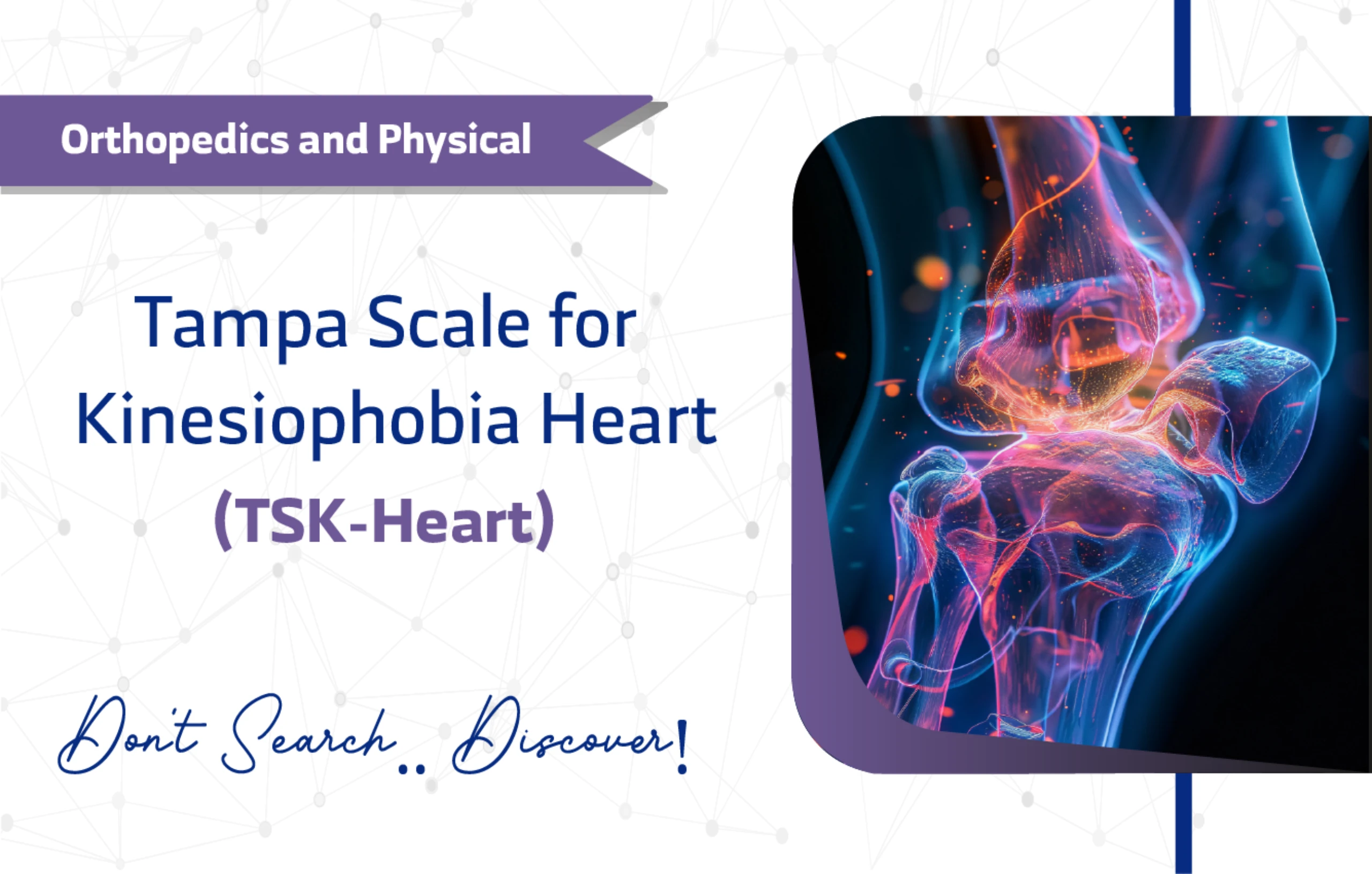
Cardiac conditions often trigger unique fears of movement that can hinder recovery, which requires specialized tools. Consequently, the Tampa Scale for Kinesiophobia – Heart (TSK-Heart) emerges as a critical instrument for evaluating these concerns. Developed by Maria Bäck, Åsa Cider, Johan Herlitz, Mari Lundberg, and Bengt Jansson in 2012, this 17-item questionnaire has garnered over 120 citations on Google Scholar for its targeted approach to cardiac kinesiophobia. Specifically, it measures fears related to exercise and physical activity in patients with heart conditions, such as coronary artery disease or heart failure. Therefore, this article provides a comprehensive guide to the TSK-Heart, detailing its structure, applications, and value for researchers and clinicians aiming to improve cardiac rehabilitation outcomes
Key Features of the Tampa Scale for Kinesiophobia - Heart (TSK-Heart)
Purpose and Use
The TSK-Heart serves as a psychological assessment tool with a clear purpose. Notably, it measures kinesiophobia linked to cardiac conditions, such as fear of heart attacks or chest pain. Additionaly it identifies patients hesitant to engage in exercise during cardiac rehabilitation, facilitating early intervention to enhance recovery. Thus, it plays a vital role in integrative psychocardiology, supporting both preventive cardiology and rehabilitation efforts.
Target Population
The TSK-Heart targets adults aged 25 and older including:
- Middle-aged adults (25-44 years)
- Older adults (45-64 years)
- Seniors (65+ years)
However, The TSK-Heart-A is an adaptation for adolescents aged 12–18 years, validated in patients with arrhythmia disorders or Fontan palliation. It retains the original 17-item structure with minor adjustments in language for age-appropriateness.
Structure
The TSK-Heart comprises 17 items that delve into cognitive and emotional aspects of kinesiophobia in cardiac contexts. Specifically, it covers:
- Fear of physical activity due to potential cardiac events (e.g., heart attack or chest pain).
- Avoidance behaviors, such as avoiding exercise to prevent heart-related symptoms.
- Catastrophic thinking about bodily sensations, like interpreting increased heart rate as dangerous.
- Somatic focus, with heightened awareness of cardiac-related symptoms.
- Negative beliefs about movement, recovery, and physical activity in heart disease contexts.
Moreover, it addresses domains including cardiology, psychological aspects of physical activity in cardiac conditions, and fear of movement linked to coronary artery disease or heart failure.
Scoring Method
The TSK-Heart employs a 4-point Likert scale (1 = Strongly disagree to 4 = Strongly agree) across 17 items, with 4 reversed items inverted before summing. As a result, total scores range from 17 to 68, where higher scores indicate greater cardiac-specific fear of movement. It features a four-factor structure:
- Perceived danger
- Avoidance of exercise
- Fear of injury
- Dysfunctional self
For example, clinicians can use subscale scores to identify specific fears, such as avoidance of exercise, to tailor interventions. Although no universal cut-off scores exist, elevated totals often signal the need for psychological support in rehabilitation programs.
Administration Format
The TSK-Heart is efficient, taking approximately 5-10 minutes to complete, making it suitable for busy clinical settings. Additionally, it supports multiple administration formats:
- Paper-based
- Digital (online)
- Mobile app
- In-person interview
- Phone or video call
- All formats
Notably, the questionnaire is self-administered, requiring no specialized training for administration or interpretation.
Applications of Tampa Scale for Kinesiophobia - Heart (TSK-Heart)
The TSK-Heart offers versatile applications:
- Screening: Identifies patients with significant movement fears, prompting timely interventions.
- Monitoring: Tracks changes in kinesiophobia during rehabilitation.
- Treatment Planning: Guides tailored strategies based on subscale scores, such as addressing avoidance behaviors.
- Research: Supports studies on psychological barriers to cardiac recovery.
For instance, a high score on the avoidance subscale might lead clinicians to encourage safe exercise, while researchers can analyze trends to improve rehabilitation protocols.
Language and availability
To ensure global accessibility, the TSK-Heart is available in:
- English
- Mandarin Chinese
- Spanish
- German
- Polish
- Turkish
The tool is freely available in the public domain, with no licensing fees required.
Reliability and Validity
The TSK-Heart demonstrates high reliability and validity, with Cronbach’s alpha of 0.78 .Moreover it is supported by robust validation studies. These studies confirm its sensitivity for assessing cardiac kinesiophobia, making it a trusted tool for both research and clinical practice.
- Original validation study study link
- Turkish validation study link
- Portuguese validation study link
- Chinese validation study link
- Polish validation study link
Limitations and Considerations
Despite its strengths, the TSK-Heart has several limitations:
- Self-Report Measure: Responses may be influenced by personal interpretation or social desirability bias.
- Cultural Bias: Its applicability across diverse cultural contexts may be limited without further validation.
- Language Barriers: Availability in only three languages (English, Mandarin Chinese, Spanish) restricts use in other linguistic groups.
- Limited Validation Studies: Additional studies are needed to confirm its effectiveness in broader populations.
- Age Restrictions: Not suitable for all age groups, particularly younger patients (e.g., under 18).
- Narrow Focus: It focuses solely on fear of movement in cardiac contexts, limiting its scope for other conditions.
Other Versions And Related Questionnaires
The TSK-Heart has a shorter version, the TSK-11, with 11 items for faster assessments in research or clinical settings. Additionally, complementary questionnaires include:
- Fear-Avoidance Beliefs Questionnaire (FABQ)
- Cardiac Anxiety Questionnaire (CAQ)
- Fear of Activity in CHD (Fact-CHD)
- Kinesiophobia Causes Scale (KCS)
Additional Resources
For more information on the TSK-Heart , explore these resources:
- Original Validation Study
- Download the TSK-Heart as PDF
- For inquiries, contact Maria Bäck, the first author of the questionnaire at m.back@vgregion.se
Frequently Asked Questions (FAQ)
- Who can use the TSK-Heart?
Clinicians, researchers, and healthcare providers use the TSK-Heart for patients aged 18 and older with cardiac conditions. - How long does it take to complete the TSK-Heart?
Patients typically complete it in 5-10 minutes, ideal for busy clinical environments. - How is the TSK-Heart administered?
It can be administered via paper, digital, mobile app, or interview formats, offering flexibility. - Is there any cost to using the TSK-Heart?
The TSK-Heart is free for use and no permission required.
A word from ResRef about Tampa Scale for Kinesiophobia - Heart (TSK-Heart)
The Tampa Scale for Kinesiophobia – Heart (TSK-Heart) is a valuable and specialized tool designed to assess fear of movement specifically in patients with cardiac conditions. Its focused approach helps clinicians and researchers identify psychological barriers that may hinder cardiac rehabilitation and recovery. Despite its narrow scope, the questionnaire demonstrates high reliability and validity, making it a trusted instrument in integrative psychocardiology.
References
- Bäck, M., Cider, Å., Herlitz, J., Lundberg, M., & Jansson, B. (2012). The Tampa Scale for Kinesiophobia Heart (TSK-Heart): Development and evaluation of a new test instrument. Journal of Rehabilitation Medicine, 44(7), 598–605. link
- Acar, S., Savci, S., Keskinoğlu, P., Kesginoglu, P., Saglam, M., & Özpelit, E. (2016). Tampa Scale of Kinesiophobia for Heart Turkish Version Study: Validity and Reliability. Archives of Rheumatology, 31(2), 130–138. link
- Ghisi GL de M, Santos RZ dos, Felipe TR, Bonin CDB, Pinto EF, Guerra FEF, et al.. Validation of the portuguese version of the tampa scale for kinesiophobia heart (TSK-SV heart). Rev Bras Med Esporte [Internet]. 2017May;23(3):227–31.link
- Chen, J., Guo, W., Liu, H., Liu, W., Chen, J., & Ma, C. (2023). Translation and psychometric evaluation of a scale to measure the fear of activity in Chinese patients with coronary artery disease. Nursing Open, 10, 4033–4043. link
- Knapik, A., Dąbek, J., Gallert-Kopyto, W., Plinta, R., & Brzęk, A. (2020). Psychometric Features of the Polish Version of TSK Heart in Elderly Patients with Coronary Artery Disease. Medicina, 56(9), 467. link