

Introduction
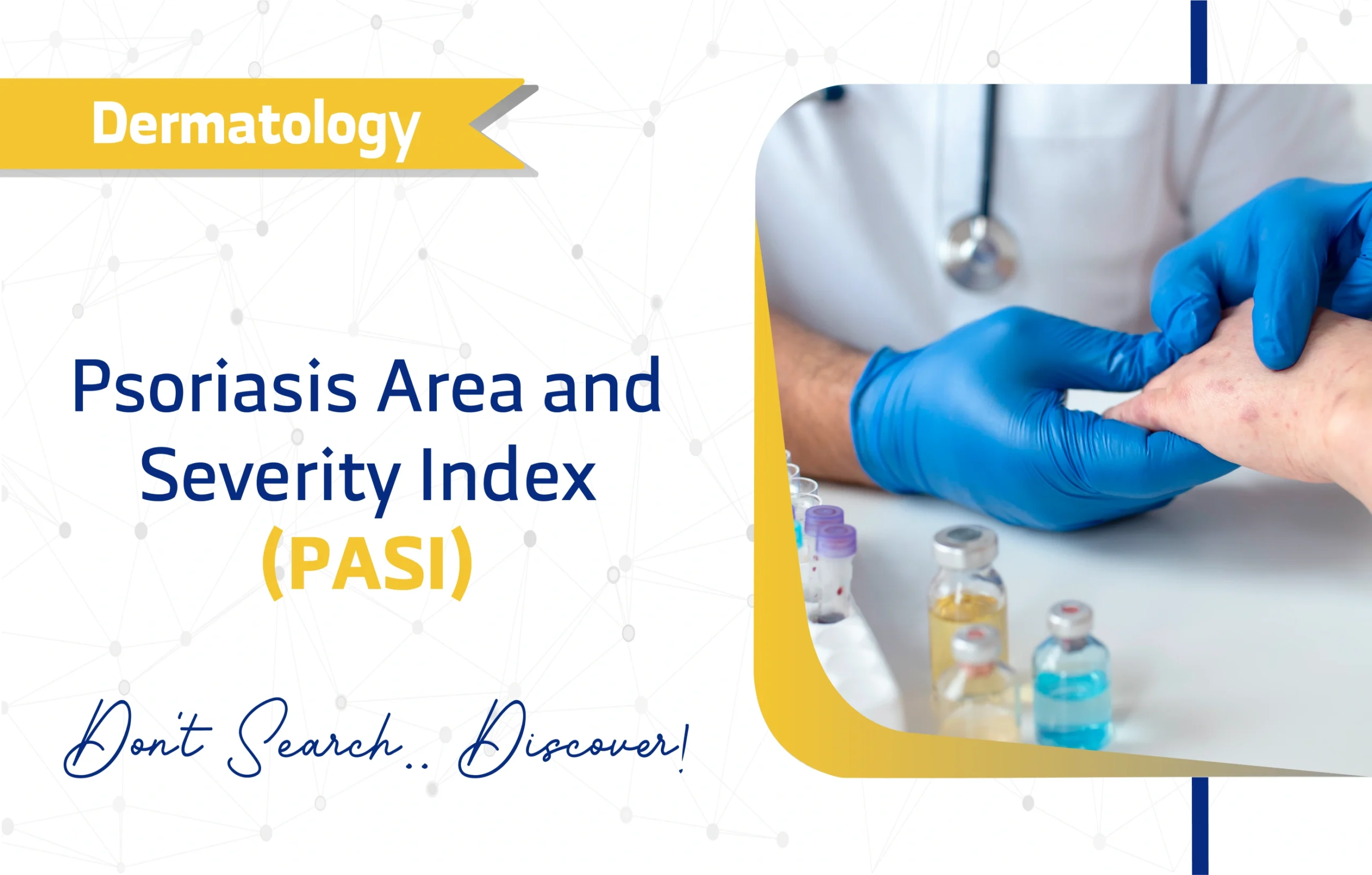
The Psoriasis Area and Severity Index (PASI) is a cornerstone in dermatology for assessing the severity of psoriasis. Since its introduction by Fredriksson and Pettersson in 1978, this standardized tool has transformed how clinicians and researchers evaluate psoriasis, a chronic skin condition affecting millions globally. Specifically, the PASI quantifies the extent of skin involvement and clinical signs like erythema, induration, and desquamation. With over 10,000 citations on Google Scholar, its widespread adoption underscores its reliability and utility in clinical trials and practice .
This article provides an in-depth overview of the PASI questionnaire, exploring its purpose, structure, clinical applications, and limitations.
Key Features of the Psoriasis Area and Severity Index (PASI)
Purpose and Use
The PASI serves as a critical tool for evaluating psoriasis severity. By assessing body area involvement and clinical signs, it enables clinicians to monitor disease progression and treatment efficacy. Moreover, researchers rely on the PASI in clinical trials to standardize outcomes, ensuring consistent evaluation across diverse populations. For example, it is widely used to measure treatment responses, such as PASI-75, indicating a 75% improvement in scores.
Target Population
The PASI is designed for adults and adolescents aged 12 and older. Specifically, it targets patients with plaque psoriasis or other psoriasis variants. However, it is not recommended for children under 12 due to differences in body surface area and disease presentation. Therefore, it is suitable for:
- Adolescents (13–17 years)
- Young adults (18–24 years)
- Middle-aged adults (25–44 years)
- Older adults (45–64 years)
- Seniors (65+ years)
Questionnaire Details
The PASI does not rely on patient-reported responses. Instead, it comprises four main components:
- Body Area Involvement: Head, trunk, upper extremities, and lower extremities.
- Clinical Signs: Erythema (redness), induration (thickness), and desquamation (scaling).
Each component is scored individually, with clinical signs rated on a 0–4 scale and body area involvement on a 0–6 scale. Consequently, this structure allows for precise, objective assessments.
Scoring and Interpretation
The PASI score is calculated using a weighted formula: PASI = (Head Score × 0.1) + (Trunk Score × 0.3) + (Upper Extremities Score × 0.2) + (Lower Extremities Score × 0.4)
Each body region’s score is determined by multiplying the sum of erythema, induration, and desquamation scores (0–4) by the percentage of body surface area affected (0–6). The total score ranges from 0 to 72, with interpretation as follows:
- 0: No disease
- 1–10: Mild disease
- 10–20: Moderate disease
- >20: Severe disease
Additionally, PASI-75, PASI-90, and PASI-100 indicate 75%, 90%, and 100% improvements, respectively, serving as benchmarks in clinical trials.
Administration Format
The PASI requires approximately 5–10 minutes to administer, though complex cases may take longer. Healthcare professionals can administer it in various formats:
- Paper-based
- Digital (online)
- Interview (in-person)
Applications of Psoriasis Area and Severity Index (PASI)
The PASI offers versatile applications in dermatology, including:
- Screening: Identifies patients with significant psoriasis severity.
- Diagnosis: Supports accurate diagnosis by quantifying clinical signs.
- Monitoring: Tracks disease progression and treatment outcomes over time.
- Treatment Planning: Guides clinicians in tailoring interventions based on severity scores.
- Research: Standardizes outcome measures in clinical trials, facilitating evidence-based dermatology.
For example, researchers use PASI scores to evaluate the efficacy of biologics in psoriasis treatment, ensuring consistent and comparable results.
Other Versions And Related Questionnaires
- Other versions:
The PASI includes variant metrics to evaluate treatment outcomes, such as:
- PASI-75: Indicates a 75% improvement in the PASI score, a common benchmark in clinical trials.
- PASI-90: Reflects a 90% improvement, indicating near-complete disease clearance.
- PASI-100: Represents a 100% improvement, signifying complete resolution of psoriasis symptoms.
- Related questionnaires:
- Dermatology Life Quality Index (DLQI): Assesses the impact of skin conditions on quality of life.
- Body Surface Area (BSA): Measures the extent of skin involvement.
- Physician Global Assessment (PGA): Provides a holistic evaluation of disease severity.
These tools, when used alongside the PASI, offer a comprehensive assessment of psoriasis.
Language and availability
To ensure global accessibility, translators adapted the PASI into multiple languages, including:
- Arabic
- English
- Mandarin Chinese
- Spanish
- French
- Russian
- German
As a result, its multilingual accessibility supports diverse clinical and research contexts.
The PASI is a public-domain tool, freely available for clinical and research use without restrictions. Consequently, no licensing or payment is required, making it accessible to healthcare professionals worldwide.
Reliability and Validity
The PASI is a robustly validated tool in dermatology, boasting a Cronbach’s alpha greater than 0.90, which indicates high reliability. Additionally, it demonstrates excellent sensitivity to changes in psoriasis severity and well-established specificity and validity through numerous clinical trials.
Limitations and Considerations
Despite its strengths, the PASI has a few limitations:
- Complexity: Scoring can be intricate, requiring training for accurate results.
- Lack of Sensitivity to Change: May not fully capture subtle changes in disease severity.
- Narrow Focus: Focuses solely on psoriasis severity, not directly assessing quality of life.
- Self-report measure: It may be subject to biases
Consequently, clinicians often combine the PASI with tools like the DLQI to evaluate quality-of-life impacts.
Additional Resources
For more information on the PASI and to access the full questionnaire, visit the following resources:
- Original Validation Study: study link
- Access (PASI): PASI PDF
- Additional PASI resources: National Psoriasis Foundation
Frequently Asked Questions (FAQ)
1. Who can use the PASI?
Clinicians and researchers use the PASI for patients aged 12 and older with psoriasis.
2. How long does it take to complete the PASI?
It typically takes 5–10 minutes, though complex cases may require more time.
3. How is the PASI administered?
Healthcare teams can administer it via paper, digital, or in-person interview formats.
4.Is there any cost to using the PASI?
The PASI is free for clinical and research use, with no licensing required.
A word from ResRef about Psoriasis Area and Severity Index (PASI)
The Psoriasis Area and Severity Index (PASI) is an essential tool for dermatologists and researchers studying psoriasis. Its standardized scoring system ensures consistent evaluation across diverse populations and treatment settings. However, users should consider its limitations and combine it with other measures when necessary.
References
- Fredriksson, T., & Pettersson, U. (1978). Severe psoriasis—oral therapy with a new retinoid. Dermatologica, 157(4), 238–244. link
- Salwe K, Kumar S, Hood J. Nonfatal occupational injury rates and musculoskeletal symptoms among housekeeping employees of a hospital in Texas. J Environ Public Health. 2011;2011:382510. doi: 10.1155/2011/382510. Epub 2011 Jun 5. PMID: 21776437; PMCID: PMC3136138. link




2 thoughts on “Psoriasis Area and Severity Index (PASI): A Full Guide for Researchers and Clinicians.”
Greetings! Quick question that’s entirely off topic. Do you know how to make your site mobile friendly? My blog looks weird when browsing from my iphone4. I’m trying to find a template or plugin that might be able to resolve this problem. If you have any suggestions, please share. With thanks!
I came across your blog and it was very interesting. Thanks. I have a question for you.