The Scientific Publication Process: From Journal Selection to Acceptance

0
0 out of 5 stars (based on 0 reviews)

Table of Contents

Overview

 Publishing a scientific manuscript involves multiple critical stages that ensure the research reaches the right audience, maintains academic rigor, and contributes meaningfully to the scientific community. This guide covers the full publication process, including choosing the right journal, preparing submissions, understanding peer review, responding to reviewer comments, dealing with rejection, and comparing open access versus subscription journals.

Choosing the Right Journal

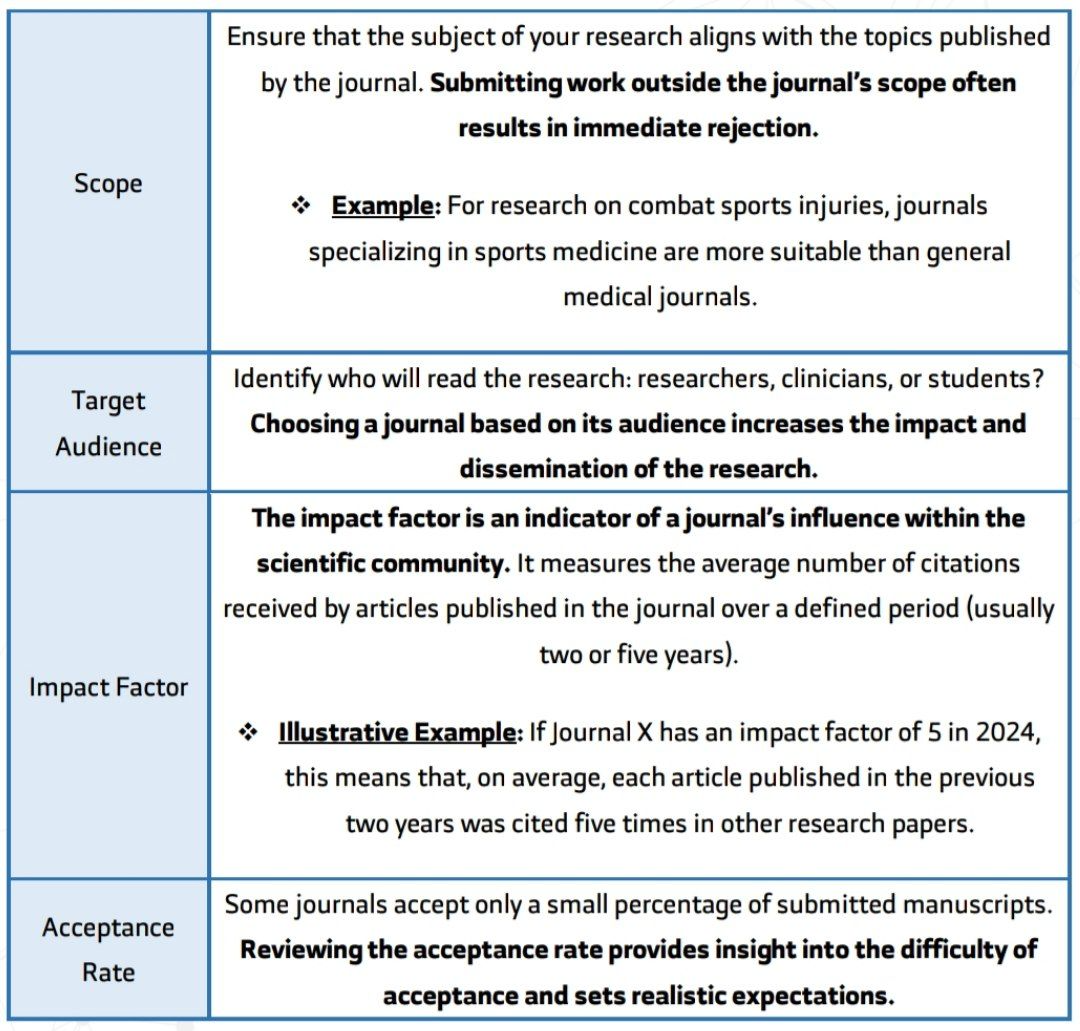
Selecting the appropriate journal is a critical step before submitting a scientific manuscript.

Making an informed choice:

    • Increases the likelihood of acceptance.
    • Ensures the research reaches the intended audience.
    • Reflects the author’s professionalism in presenting their work.

Key Factors in Journal Selection

Importance of the Impact Factor:

    • Reflects the journal’s reputation and the significance of its publications.
    • Helps estimate the difficulty of acceptance, as high-impact journals are often highly competitive.
    • Influences academic recognition, particularly in theses and research projects.

How to Identify Impact Factor:

  • Official databases such as Journal Citation Reports (JCR – Web of Science) and Scopus (Scimago Journal Rank – SJR).
  • Journal websites, where most journals display their impact factor or a similar metric.
  • Academic search engines, which may provide Impact Factor or CiteScore information.

Checking Author Guidelines

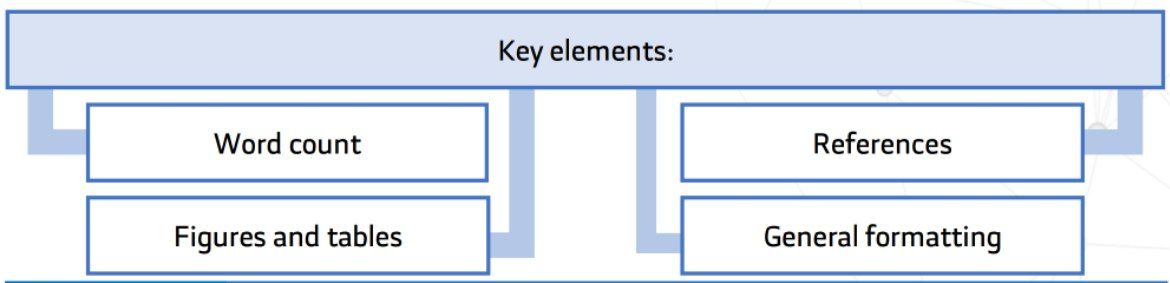
Each journal has specific rules for manuscript preparation:

  • Word count limits
  • Table and figure formatting
  • Citation and reference style

Practical tip:

  • Compile a list of potential journals before starting the writing process.
  • Review recent publications in the journal to understand accepted writing style and topics.
  • If unsure about fit, send a brief inquiry email to the editor prior to submission.
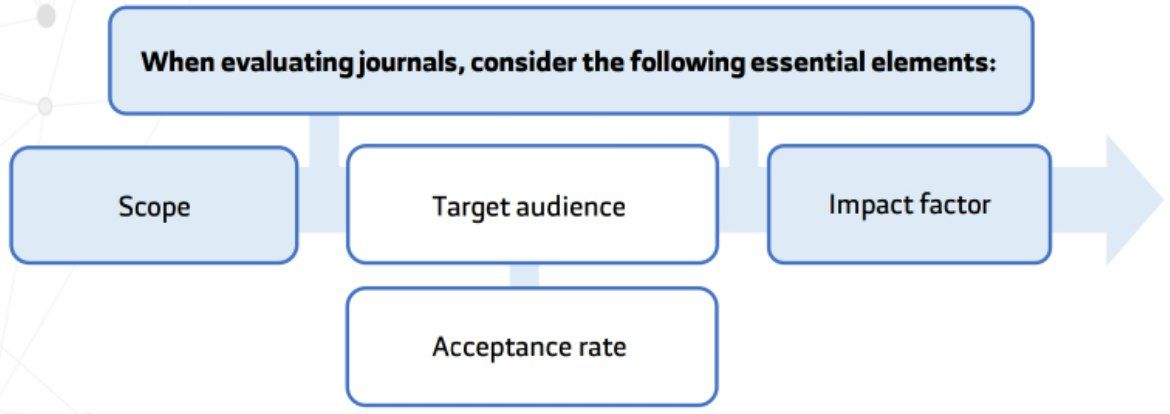
  • Do not select a journal solely based on its impact factor; also consider the alignment of the research topic with the journal’s scope and target audience. High-impact journals are excellent but highly competitive, so medium-impact journals may be more suitable for new research or studies with limited data.

Preparing for Submission

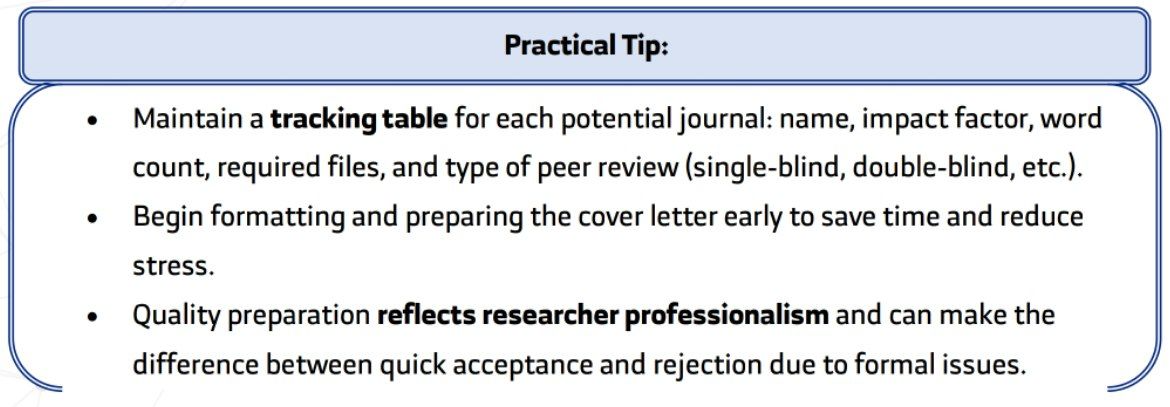
Once the appropriate journal is selected, preparation for submission is crucial. This step increases the chances of acceptance and reduces delays or early rejection. Thorough preparation reflects the researcher’s professionalism and commitment to quality.

1. Preparing a Cover Letter

The cover letter is the first impression the editor receives of your work. It should be concise, clear, and persuasive, explaining the significance of the study and its relevance to the journal.
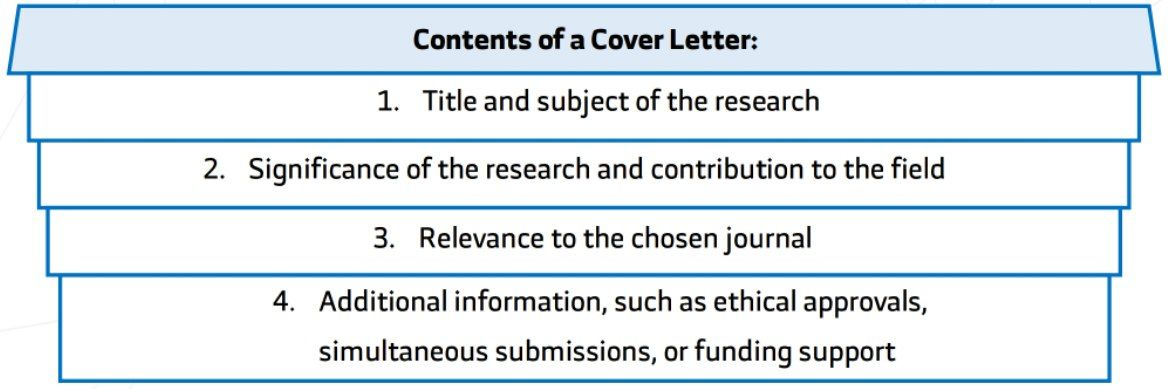
Example:
We submit this study examining the impact of physical training on injuries in combat sports. The study highlights prevention mechanisms and injury reduction strategies, aligning with the focus of [Journal Name] on sports medicine and injury prevention. All participants provided informed consent, and ethical approvals were obtained.”

Practical tip:

  • Keep the letter brief—usually one page suffices.
  • Emphasize the scientific value of the research, not technical details of every experiment.
  • Begin with an engaging introduction and conclude with a clear statement of the importance of acceptance.

2. Ensuring Compliance with Formatting Guidelines
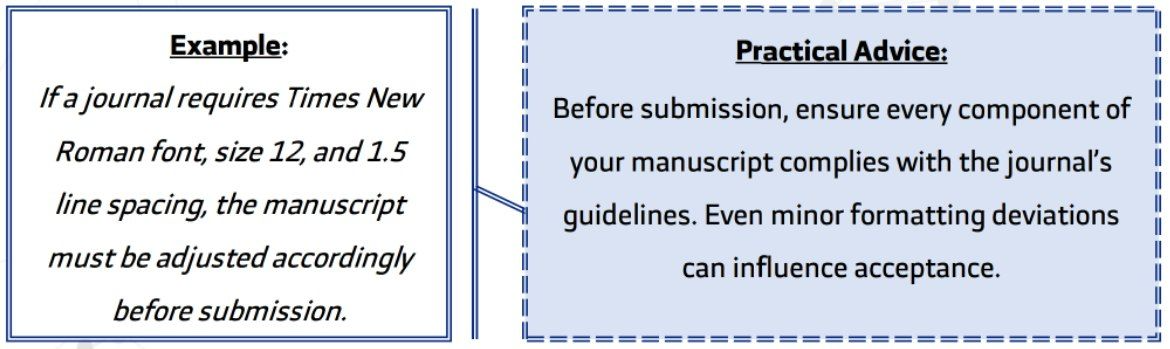
Each journal has specific manuscript formatting requirements. Failure to comply can lead to rejection or extended delays prior to peer review.
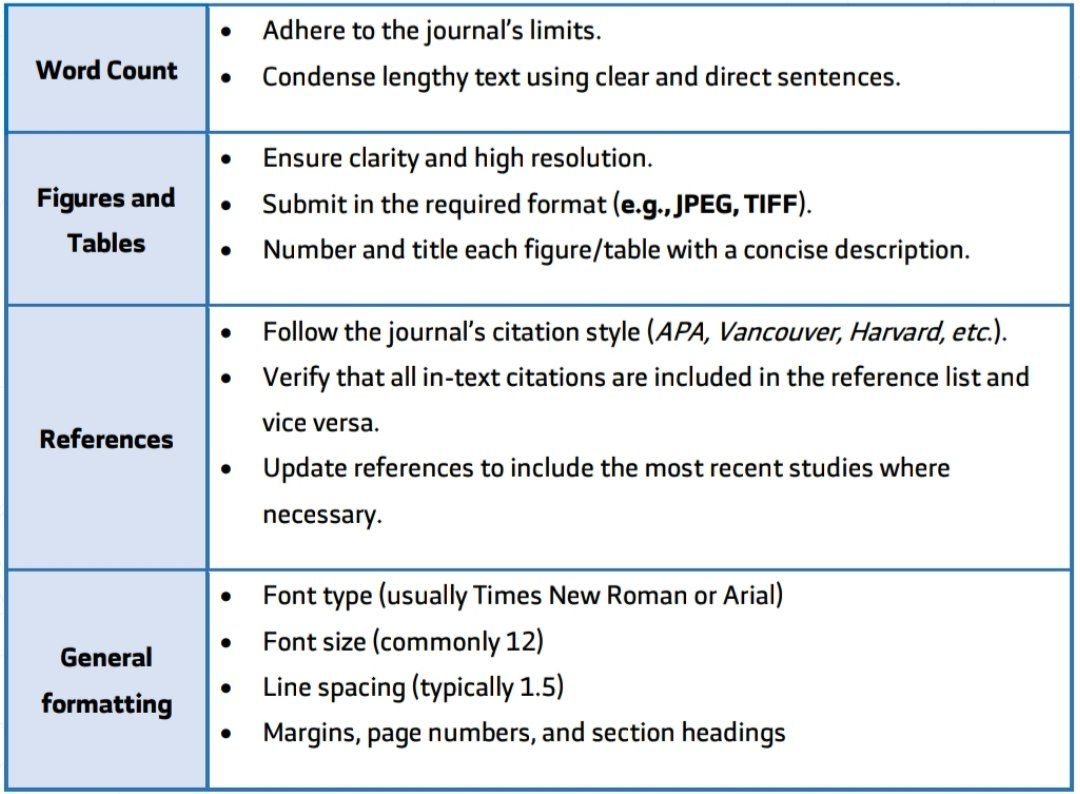
Practical tip:

  • Prepare a final PDF version to check formatting, as some issues appear during Word-to-PDF conversion.
  • Use a checklist to ensure no requirement is overlooked.


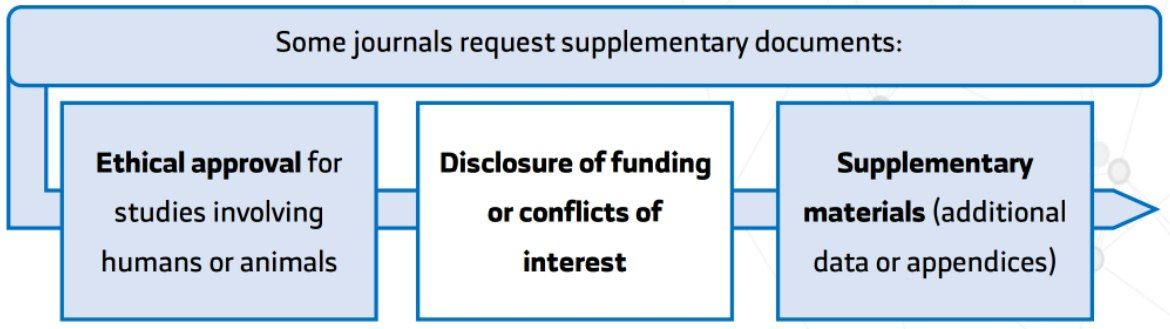
3. Additional Required Files


Providing complete documents demonstrates adherence to scientific publishing standards and facilitates smooth peer review.

4. General Pre-Submission Tips

  • Critically review the manuscript for clarity and data consistency.
  • Request colleagues or supervisors to review both manuscript and cover letter.
  • Keep editable copies and a PDF version ready for submission.
  • Ensure that figures, tables, and references meet the journal’s requirements.
Understanding peer review

After submission, the manuscript enters the peer review process, a critical step for ensuring research quality and validity. Peer review serves as academic assurance, where independent experts evaluate the manuscript for publication suitability.

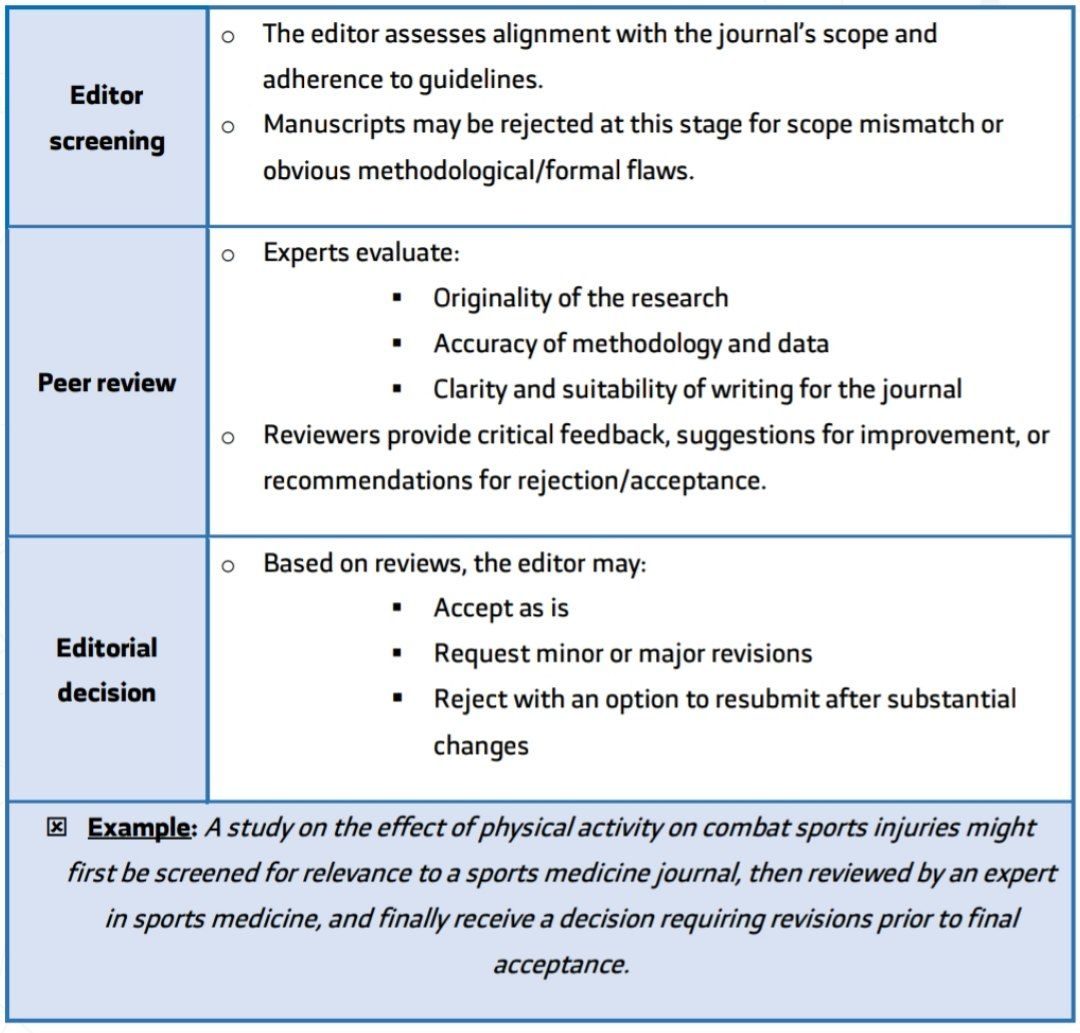
1. The journey from submission to decision

Manuscripts generally pass through the following stages:

  1. Editor screening
  2. Peer review
  3. Editorial decision

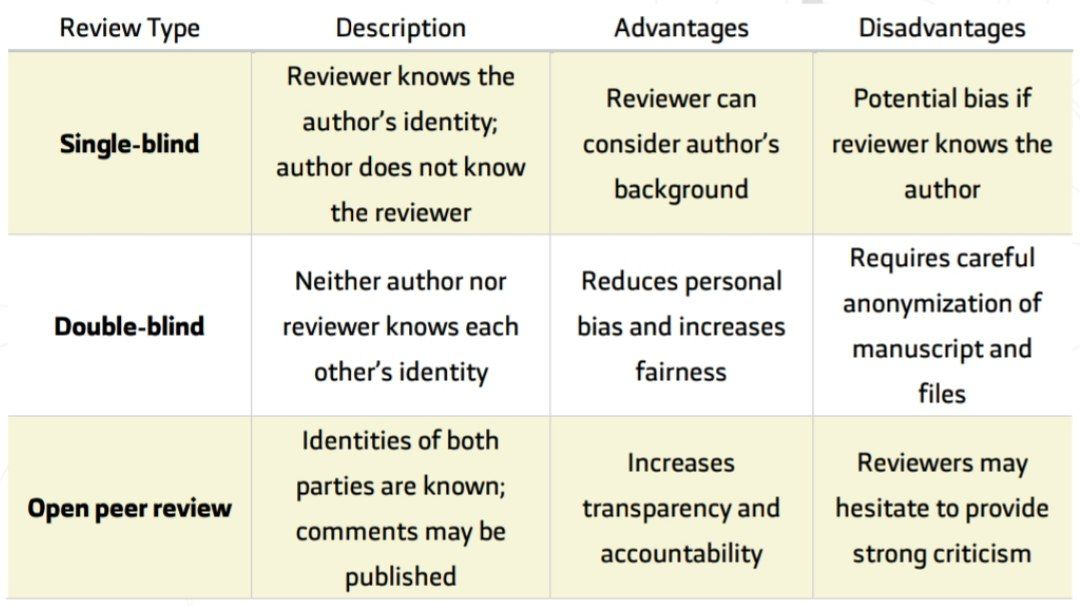
2. Types of peer review models:

Different journals use different peer review models, each with advantages and limitations:

Practical tip:

  • Verify the peer review type before submission to properly anonymize or prepare the manuscript.
  • For double-blind review, remove any author or institutional identifiers from the manuscript and supplementary files.

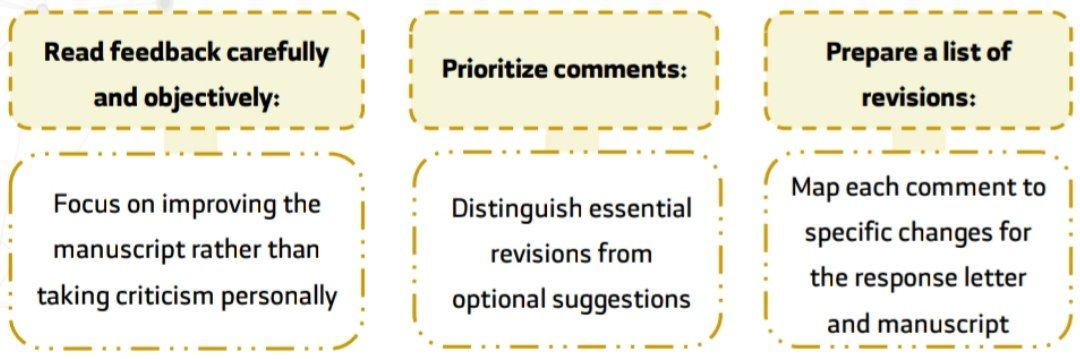
3. Tips for navigating peer review:

Example:
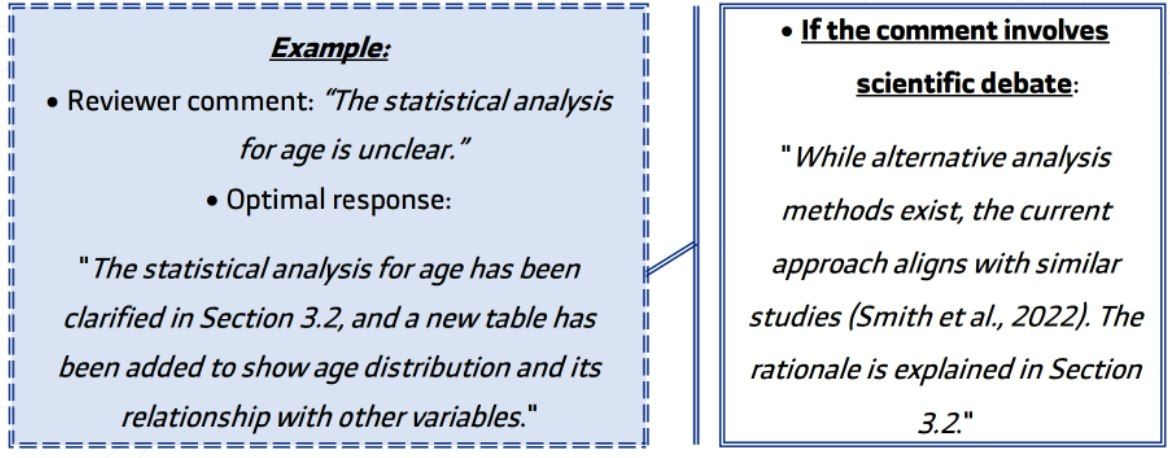
If a reviewer notes, “The statistical method is unclear”, clarify the method in the text or add an appendix explaining the analysis and describe this change in the response letter.


Practical tip:

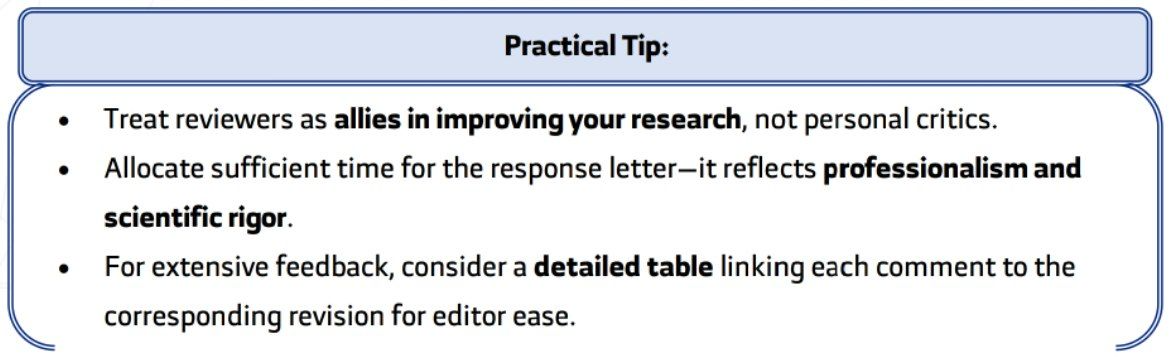
  • Consider reviewers as collaborators in improving the manuscript, not personal critics.
  • Save all comments and responses, which may assist in resubmission to another journal.
  • Learn from each review round—even rejection often improves the research for future publication.


Responding to Reviewers Comments

Responding to reviewer feedback is a crucial part of the publication process. It is an opportunity to enhance the manuscript and increase the chances of acceptance, not a personal critique of the author. The key is to respond professionally and objectively, while maintaining clarity in scientific arguments when necessary.

1. Approaching comments with an open mind:

It is natural to feel defensive or frustrated by criticism, but the best approach is to consider each comment as an opportunity for improvement.

  1. Categorize the comments.
  2. Evaluate each comment objectively.
  3. Respond thoughtfully.


1. Categorize the comments:

    • Major comments: Substantial changes in methodology, analysis, or results
    • Minor comments: Improvements in wording, grammar, table/figure formatting

2. Evaluate each comment objectively:

    • Is the feedback scientifically valid?
    • Can the manuscript be improved according to the suggestion?
    • Some comments reflect personal opinions of the reviewer—select what strengthens the research.

3. Respond thoughtfully:

    • Accept suggestions that improve the manuscript.
    • Defend your choices scientifically only when necessary, providing supporting evidence.
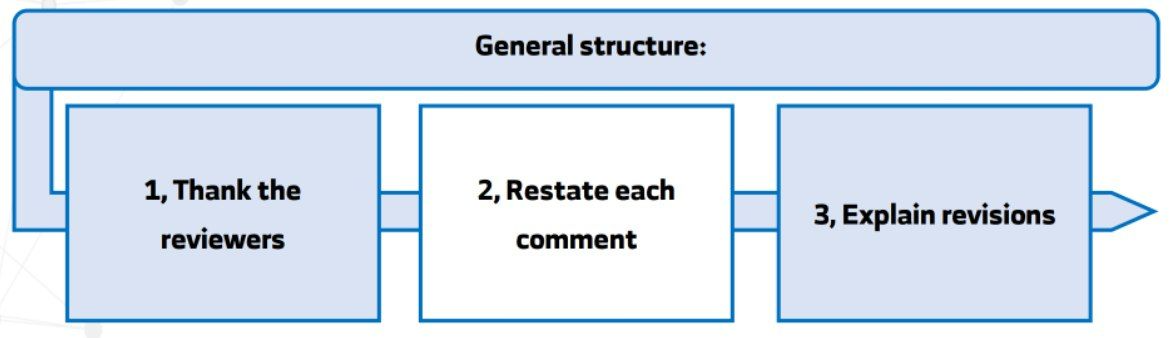
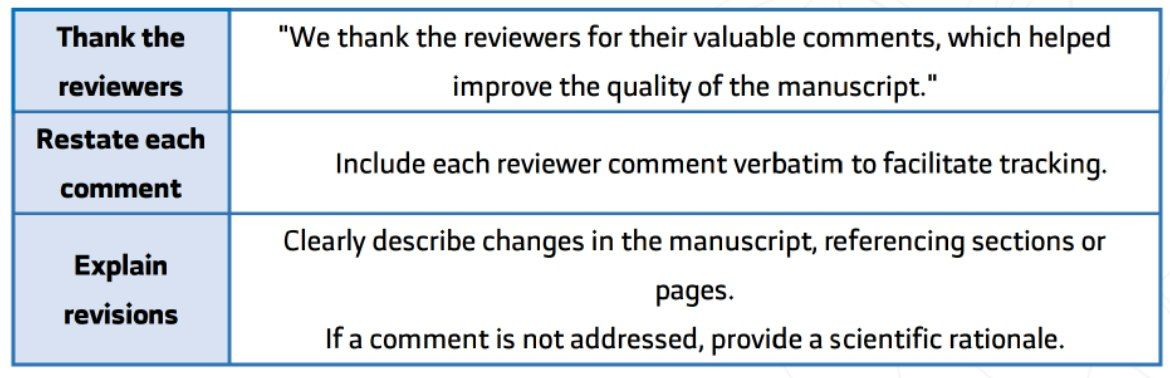
2. Preparing a response letter:

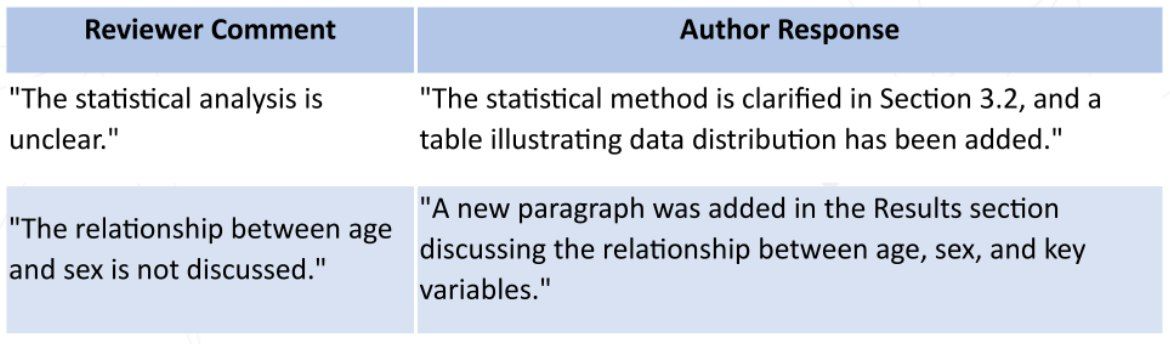
The response letter explains how you addressed each comment. This document demonstrates to editors and reviewers that feedback was taken seriously and acted upon objectively.

Example Table for Response Letter:
3. Practical tips for responding:

  • Begin with major comments, then proceed to minor ones.
  • Use polite, professional language even when defending decisions.
  • Avoid overly brief responses such as “corrected”; specify changes clearly.
  • Distinguish between textual edits and explanatory additions to strengthen the manuscript.
  • Keep copies of all comments and responses for future reference or resubmission.
 

Dealing with rejection

Receiving a manuscript rejection is a normal part of the publication process. Even experienced researchers face rejection, and the key is how to learn from it rather than being discouraged. Lessons learned can improve the manuscript and increase the likelihood of acceptance in future submissions.

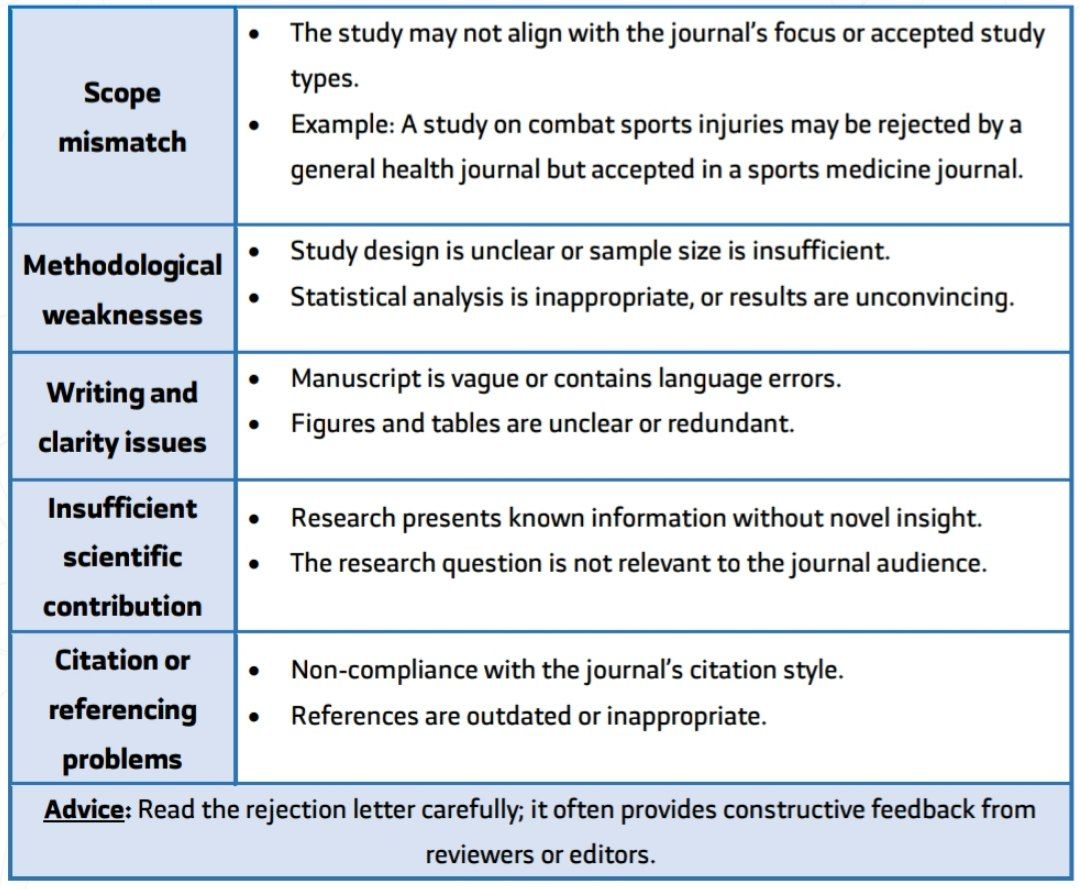
1. Common reasons for rejection:

Understanding the reasons for rejection helps enhance the manuscript before resubmission. Common reasons include:
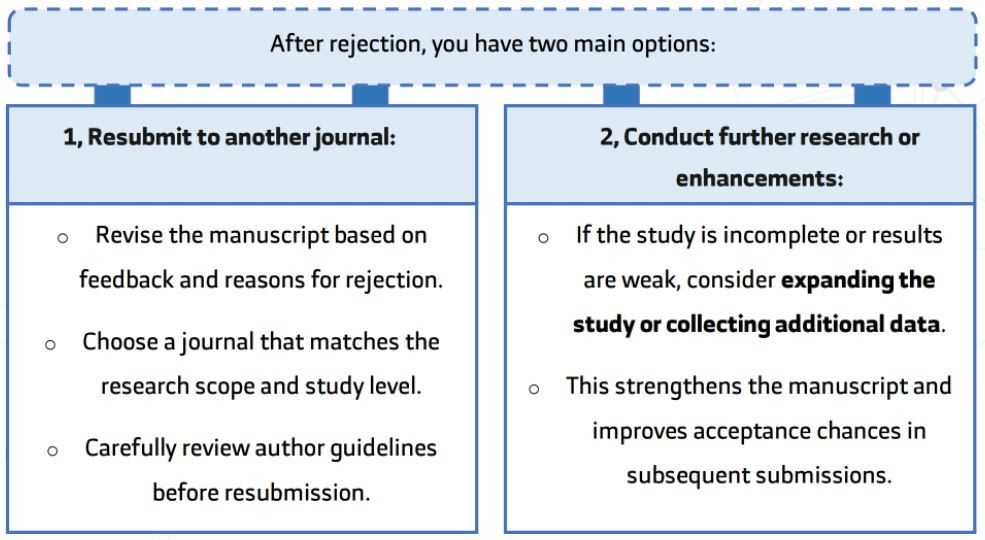
2. Next steps after rejection:
Practical tip:

Avoid making hasty decisions after rejection. Review comments thoroughly and identify strengths and weaknesses. Even minor revisions can significantly improve outcomes.

  • View rejection as a learning opportunity, not a personal failure.
  • Retain all feedback to improve the current manuscript or future projects.
  • Discuss reviewer comments with colleagues or mentors to determine the best strategy for resubmission.

Example: A study on a drug’s efficacy was rejected by a general medical journal due to insufficient statistical analysis. The authors increased sample size, improved analysis, and submitted to a specialized pharmacology journal, ultimately achieving acceptance.


Open access vs subscription journals

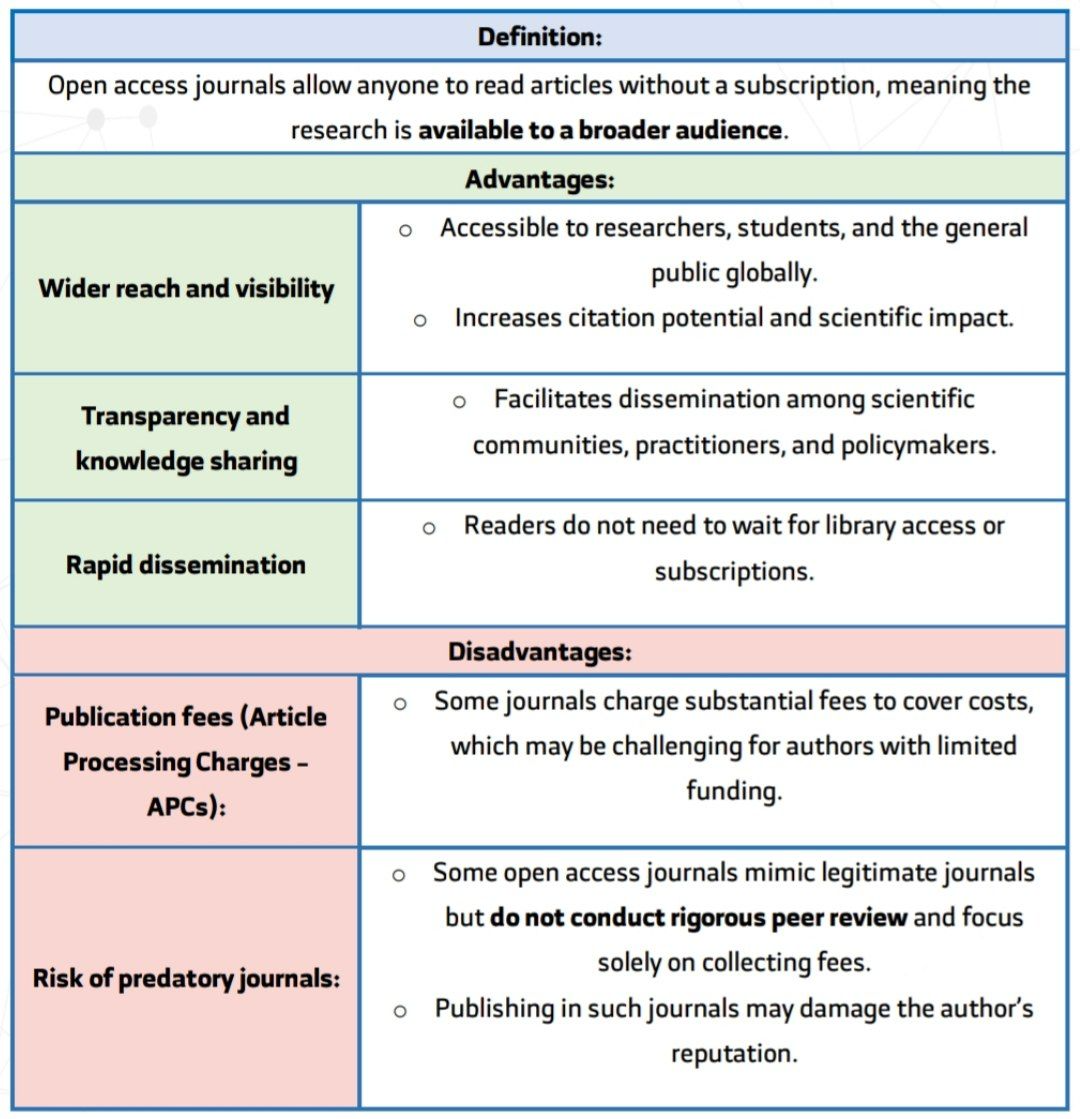
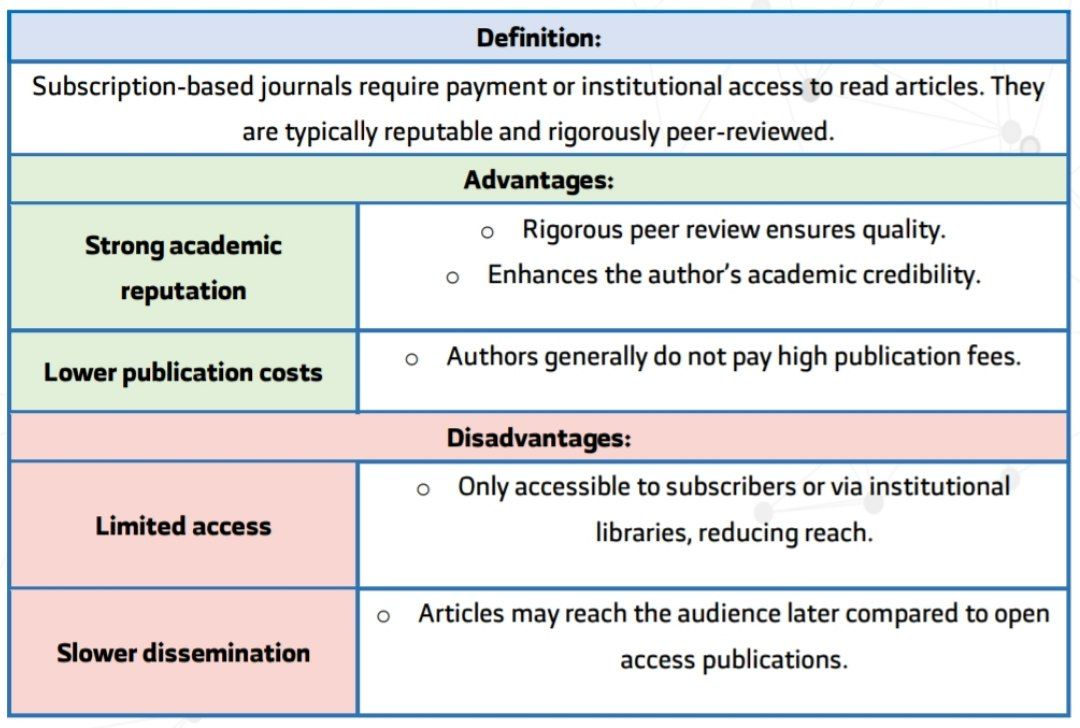
Choosing the journal type is an important part of publication strategy. Each type has advantages and disadvantages that affect dissemination, cost, and academic reputation. Understanding the differences helps authors make informed decisions on where to publish.

1. Open access journals:

2. Subscription journals:
3. Identifying and Avoiding Predatory Journals:

With the rise of open access publishing, some journals charge fees without proper peer review. To ensure safe publication:

  1. Verify the journal is listed in reputable databases:
    • DOAJ (Directory of Open Access Journals)
    • PubMed, Scopus, Web of Science
  2. Confirm editorial and review processes:
    • Presence of a recognized editorial board
    • Clear peer review description
  3. Watch for suspicious fees or overly aggressive fast-track offers.

Practical tip:

If in doubt, consult your supervisor or colleagues. Predatory journals may cause future rejection or harm your academic reputation.

  • Balance reach and cost: Choose a reliable open access journal for wider readership, but verify credibility.
  • Do not be misled by false promises: Legitimate journals maintain rigorous review and high-quality standards.
  • Check trusted databases: DOAJ, Scopus, Web of Science.

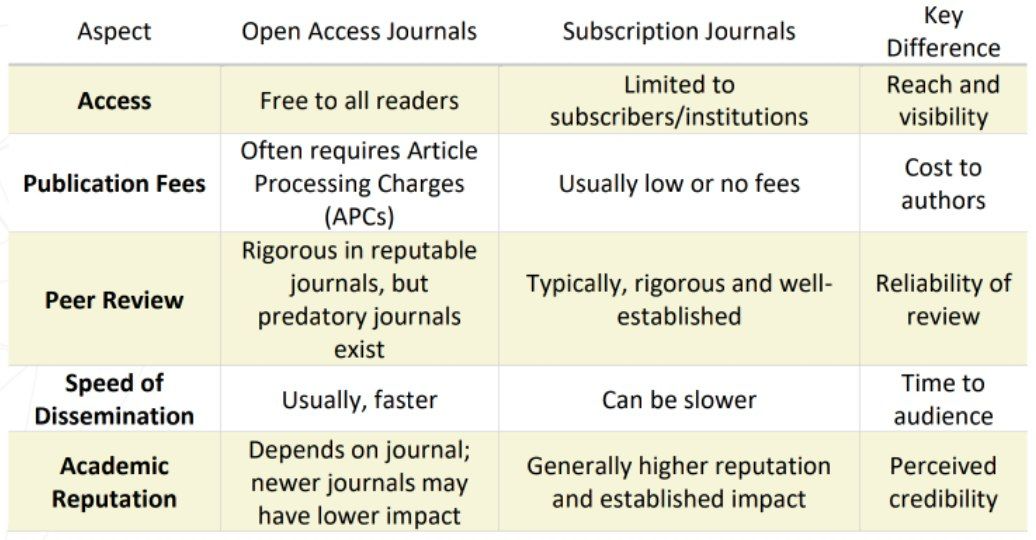
Example: Publishing research on combat sports injuries in a reputable open access journal increases visibility to coaches, clinicians, and international researchers. Publishing in a prestigious subscription journal may enhance academic recognition and credibility among peers.


Comparison Table:

Common mistakes

  1. Choosing a journal solely based on impact factor without considering scope and audience.
  2. Ignoring journal author guidelines for formatting, word count, or reference style.
  3. Responding defensively to reviewer comments instead of using them constructively.
  4. Submitting manuscripts to predatory journals without verifying legitimacy.
  5. Neglecting to prepare supplementary documents, such as ethical approvals or conflict of interest statements.

Key takeaways

  • Journal selection should balance impact factor, scope, and target audience.
  • Submission preparation includes a strong cover letter, formatted manuscript, and all required supplementary files.
  • Peer review is a collaborative process to improve the quality and clarity of research.
  • Reviewer comments should be addressed thoughtfully, with clear explanations for revisions or scientific justification when defending choices.
  • Rejection is common and should be treated as a learning opportunity to improve the manuscript.
  • Open access vs subscription journals differ in reach, cost, and reputation; researchers should choose strategically.

A Word from ResRef

Scientific publishing is a structured journey, not a single submission. Success depends on choosing the right journal, preparing a precise and compliant manuscript, and engaging constructively with peer review. Remember, rejection is not a failure, but a critical step in refining the work and improving its scientific value.

Frequently Asked Questions (FAQs)

1. Should I choose a journal only based on its impact factor?
Do not select a journal solely based on its impact factor; also consider the alignment of the research topic with the journal’s scope and target audience. High-impact journals are excellent but highly competitive, so medium-impact journals may be more suitable for new research or studies with limited data.

2. How should I approach reviewer feedback?
Read feedback carefully and objectively. Focus on improving the manuscript rather than taking criticism personally. Prioritize comments by distinguishing essential revisions from optional suggestions. Consider reviewers as collaborators in improving the manuscript, not personal critics.

3. Is rejection common?
Receiving a manuscript rejection is a normal part of the publication process. Even experienced researchers face rejection.

4. How can I avoid predatory journals?
Verify the journal is listed in reputable databases such as DOAJ, PubMed, Scopus, or Web of Science. Confirm the presence of a recognized editorial board and a clear peer review description. Watch for suspicious fees or overly aggressive fast-track offers. If in doubt, consult your supervisor or colleagues.

References

  1. Day, R.A., & Gastel, B. (2016). How to Write and Publish a Scientific Paper (8th ed.). Cambridge University Press.
  2. Gasparyan, A.Y., Ayvazyan, L., Blackmore, H., & Kitas, G.D. (2011). Writing a narrative biomedical review: considerations for authors, peer reviewers, and editors. Rheumatology International, 31, 1409–1417.
  3. Hames, I. (2017). Peer Review and Manuscript Management in Scientific Journals: Guidelines for Good Practice (3rd ed.). Wiley-Blackwell.
  4. Suber, P. (2012). Open Access. MIT Press.

Authorship and Contributions

The following section acknowledges the individuals who contributed to the authorship, editing, translation, and preparation of this article, ensuring its academic integrity and clarity.

Dr. Lama Aladel

Dr. Lama Aladal

Author

Senior Resident in Orthopedic Surgery

photo_٢٠٢٦-٠٤-٠١_٢١-١٧-٢٣

Dr. Louei Nahas

Editor

MD, Msc, PhD Assistance proffesor of Otolaryngology, Head and neck surgery

photo_٢٠٢٦-٠٣-١٢_١٣-٤٠-٣٧

Dr. Marie Noelle Seif Asskar

Translator & Formatter

A third-year medical student at the Faculty of Medicine, Latakia University, contributes to the Educational and Web departments at ResRef.
Facebook
Telegram
LinkedIn
Email

Leave a Comment

Your email address will not be published. Required fields are marked *

There are no reviews yet. Be the first one to write one.

Realted Articles

Mastering Research

Mastering Clarity and Conciseness in Scientific Writing

Discover how to master clarity and conciseness in scientific writing. Learn to use simple language, balance active and passive voice, avoid ambiguity, cite properly, and revise effectively to make your research papers more impactful and professional.

Read More »
IMRaD Model
Mastering Research

Scientific Writing Using the IMRaD Model: A Practical Guide for Researchers

Scientific writing is more than reporting results, it is about telling a clear, structured story of discovery. This article explains Scientific Writing Using the IMRaD Model, guiding researchers through each section of a scientific paper, from crafting effective titles and abstracts to presenting methods, results, and discussion with clarity and precision.

Read More »
Scroll to Top